




Thinline Nylon Guitars Explained: Benefits, Tone & Best Uses
A thinline guitar has a shallower body than a traditional full-bodied guitar. This design improves playing comfort and reduces feedback when the guitar is amplified, making it particularly suitable for live performances.
Have you ever struggled with feedback on stage? Or have you ever felt uncomfortable playing a full-depth classical guitar for a long period of time?
Shallow-body guitars are the answer! Thinline guitars became popular when more nylon-string players started performing on amplified stages, where comfort and controlling feedback became important factors.
Nylon-string guitars are renowned for their warm tone, expressive dynamics and smooth playing feel. However, for many modern players, especially those performing on stage, a traditional classical guitar can sometimes feel too deep and sensitive to feedback, making it harder to control in a live mix.
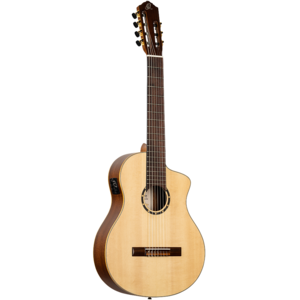
What Is a Thinline Guitar?
Thinline guitars have a shallower body than traditional acoustic or classical guitars. This makes them more comfortable to hold, easier to play standing up and less susceptible to feedback when amplified.

Do Thinline guitars sound different?
Yes, because the body is shallower, a Thinline guitar usually produces less acoustic volume than a full-bodied guitar. However, modern slim-body designs are engineered to preserve the warmth and expressiveness of nylon strings, while also improving comfort and stage performance. While a thinline guitar naturally produces less acoustic volume, the use of quality tonewoods and modern construction techniques helps to retain warmth, balance and tonal character.

Why should you choose a thinline guitar?
The shallower construction helps to create a more controlled, amplified sound. This makes these guitars a great choice for performers who play through an amplifier or public address system, but who still want to retain the natural warmth and definition of nylon strings while reducing feedback problems.
Why Were Thinline Guitars Created?

The aim is to bridge the gap between dynamic performances and the warm character of a nylon-string guitar. Modern performers, especially on stage, tend to play standing up and move around a lot. A thinline guitar is lighter and slimmer, making it more comfortable to play in these conditions. PA systems also require careful mic set-up to eliminate feedback on full-body nylon-string guitars. The shallower body generally reduces the resonance that can contribute to feedback, helping players to achieve better control at higher stage volumes. Moving to different positions on stage does not require a different setup.
These stage-ready features are combined with stunning finishes and beautiful wood tones, resulting in an easy-to-use package that is perfect for long sessions and stands out on stage.
Another benefit of the thinline construction is that it provides a more comfortable playing experience during long practice and studio sessions. This makes it perfect for beginners, players switching from electric guitars, intermediate players, and anyone searching for a comfortable playing experience.
Thinline Guitars for Live Performance - Rechargeable Preamps

Ortega is at the forefront of rechargeable onboard electronics, developing practical, USB-C-powered preamp systems that combine sustainability and convenience with professional stage performance.
The MAGUSPRO/G-RC is the perfect companion for live performances, delivering a clear tone and volume. The built-in tuner mutes the guitar signal, making tuning on stage easier. This is also useful for muting the guitar while changing effects or guitars to prevent feedback or unplugged sounds.
Ortega's rechargeable capacitor batteries are designed to withstand up to 10,000 charging cycles. A quick 5–10 minute USB-C charge provides up to 15 hours of playing time, significantly reducing the need for disposable batteries over the instrument's lifetime.
BenEfits of thinline nylon-string guitars
A thinline nylon-string guitar is ideal for players who want:
the warm, expressive tone of nylon strings
improved comfort during long playing sessions
easier amplification on stage
better control in live environments
a modern feel for crossover styles such as pop, jazz, Latin, bossa nova, R&B and singer-songwriter music
premium looks with practical, stage-ready features
Thinline vs Full-body guitars
| Feature | Thinline | Full Body |
|---|---|---|
| Comfort | Excellent | Good |
| Acoustic volume | Lower | Higher |
| Feedback resistance | Better | Standard |
| Live performance | Excellent | Good |
| Traditional classical tone | Slightly reduced resonance | Stronger resonance |
Who Should Choose a Thinline Guitar?
A Thinline nylon-string guitar is ideal for:
Live performers
Singer-songwriters
Worship musicians
Players switching from electric guitar
Musicians seeking greater comfort
A traditional full-body guitar may be better suited to:
Classical repertoire
Maximum acoustic projection
Traditional nylon-string tone
The Private Room Thinline guitars
Designed for players who want the warm character of a nylon-string guitar with greater comfort, easier handling, and stage-ready electronics, the Ortega Private Room Thinline guitars have an even smaller body depth of only 72 mm. Created especially for long studio sessions and live performances, the quieter guitar can be easily balanced out by the rechargeable preamp system.
Built for the stage - The GRandsuite Thinline Guitar

The Ortega GRSUITE-TCE Thinline is a stage-focused nylon-string guitar designed for players seeking modern comfort and premium tonewoods, as well as enhanced live monitoring. One of its standout features is the second soundhole, which acts as a natural monitor for the player. This is particularly useful on stage, where the sound of drums, percussion, keyboards and other instruments can make it difficult to hear your own guitar clearly.

The solid alpine spruce top delivers a dynamic sound with a quick response, bright trebles and warm bass. Meanwhile, the rosewood back and sides produce warm lows, rich overtones and strong projection. Finally, the maple stripe inlays provide visual contrast and a refined aesthetic.

The slim 48 mm neck makes it easier for players of electric or steel-string guitars to make the transition, while still offering nylon-string players a familiar feel. With its contoured armrest and thinline body, the GRSUITE-TCE is designed for extended playing sessions without compromising on expression or control.

The 12-hole bridge makes it easier to change the strings while providing greater tuning stability. Meanwhile, the rechargeable Magus Pro preamp reduces the need for disposable batteries. This gives players a practical, stage-ready solution.
With its balanced tonal response, ergonomic design and stage-ready electronics, it is well suited to live performances, studio recordings and extended practice sessions.
Video performances and sound examples


Elegant Tonewoods, Modern Comfort

The EXOTICSUITECE and the BRIDESUITECE both feature the same Thinline concept, but in two visually striking designs.
The EXOTICSUITECE features a solid spruce top with decorative flamed acacia veneer, combining a crisp, articulate sound with the beautiful, natural appearance of acacia. The flamed acacia back and sides add warmth, resonance and visual depth.

The BRIDESUITECE features a solid spruce top with a decorative flamed maple veneer, offering an elegant, bright appearance and clear, focused sound. The flamed maple back and sides enhance clarity, volume and projection.
Both models boast a comfortable 50 mm medium neck, a contoured armrest and a 12-hole bridge for effortless string changes and enhanced tuning stability. They also feature the rechargeable Magus Pro preamp system. These features make them equally suitable for live performances, studio work and everyday playing.
Video performances and sound examples

Is a Thinline Guitar Right for You?
A thinline nylon-string guitar combines the warmth and expressiveness of traditional nylon strings with modern playing comfort and stage-ready practicality. For performers, crossover players, and musicians looking for greater comfort during long sessions, a thinline design can offer the ideal balance between tone, ergonomics, and amplified performance.
FAQ
Yes, because they are shallower, they generally produce less acoustic volume than a full-depth guitar.
Yes, the slimmer body, onboard electronics and reduced feedback sensitivity of thinline guitars make them a popular choice for use on stage.
Many players find them more comfortable because their shallower body sits closer to the body, reducing shoulder strain.
Absolutely. Although they produce less acoustic volume than full-body guitars, they perform very well in studio environments when recorded or amplified properly.
Yes. Many players find them more comfortable due to the reduced body depth.
Yes, the shallower body produces less resonance when amplified, which helps to reduce unwanted feedback.


